Report: Governance and Tenancy Structure of 668 Powell St
Our Partnership
Bridget Moran Place Tenants Assocation (BMPTA) is part of a broader network of organized tenant advocacy. We operate under the following affiliations to ensure collective bargaining power and legal protection for all residents:
- @TANets Network Member: BMP is a managed member and associated tenants union of the @TANets network. It is designated as BMPTA – YVR. This partnership provides our local association with the organizational resources and strategic support necessary to address systemic housing issues.
- Vancouver Tenants Union (VTU): We maintain an active partnership and membership with the Vancouver Tenants Union. As part of the VTU, BMP tenants are connected to a city-wide movement of renters fighting for housing justice, rent control, and the right to remain in our community. See more at: Welcome to the VTU.
1. Overview of Property Ownership and Operation
668 Powell Street is a multi-unit residential building involving three distinct entities. The building’s governance is split between property management, service delivery, and provincial oversight:
- Owner and Landlord: Neighbourhood Housing Society (NHS). NHS holds the titles and is responsible for building maintenance and rent collection.
- Service Provider: RainCity Housing. RainCity is contracted to provide support services for a specific subset of units.
- Primary Funder: BC Housing. BC Housing provides the operating subsidies and sets the terms of the Operating Agreement.
2. Distinction in Tenancy Types
The 61 units in the building are divided into two distinct legal categories. It is vital for residents to know which category their unit falls under to protect their rights:
- Standard Studio Apartments (35 Units): These are governed strictly under the Residential Tenancy Act (RTA). Tenants have full RTA protections regarding privacy, guest policies, and evictions. There is no legal requirement for these tenants to participate in support services or wellness checks.
- Supportive Housing Units (26 Units): These units are subject to Supportive Housing RTA Guidelines. While they still fall under the RTA, they are subject to different provincial policies that may impact guest access and include service-related agreements with RainCity.
3. The Operating Agreement (2001–2036)
The building operates under a 35-year Social Housing Operating Agreement. This is a long-term legal contract between the operators and BC Housing that dictates how the building is funded and run.
- Duration: The agreement is a 35-year term, intentionally set to match the building’s 35-year mortgage amortization.
- Current Status: Having passed the 23-year mark in 2024, the building is entering the final third of its original agreement.
- The “Split” Model: Recent shifts have seen the original management autonomy of the NHS reduced. Under current provincial directives, NHS manages the physical property while RainCity Housing manages the support program for the 26 designated supportive units.
- Expiry: The current agreement is set to expire in 2036, at which point the management structure and subsidies will be fully renegotiated.
4. Summary of Legal Framework
Tenants in the 35 standard units operate under a traditional landlord-tenant relationship with NHS. The presence of RainCity staff on-site does not grant them landlord authority over standard RTA tenants. Only the 26 supportive units are governed by the provincial supportive housing framework which allows for higher levels of staff intervention.
This report was prepared for the information of tenants and resident associations to clarify the administrative and legal layers of 668 Powell St.
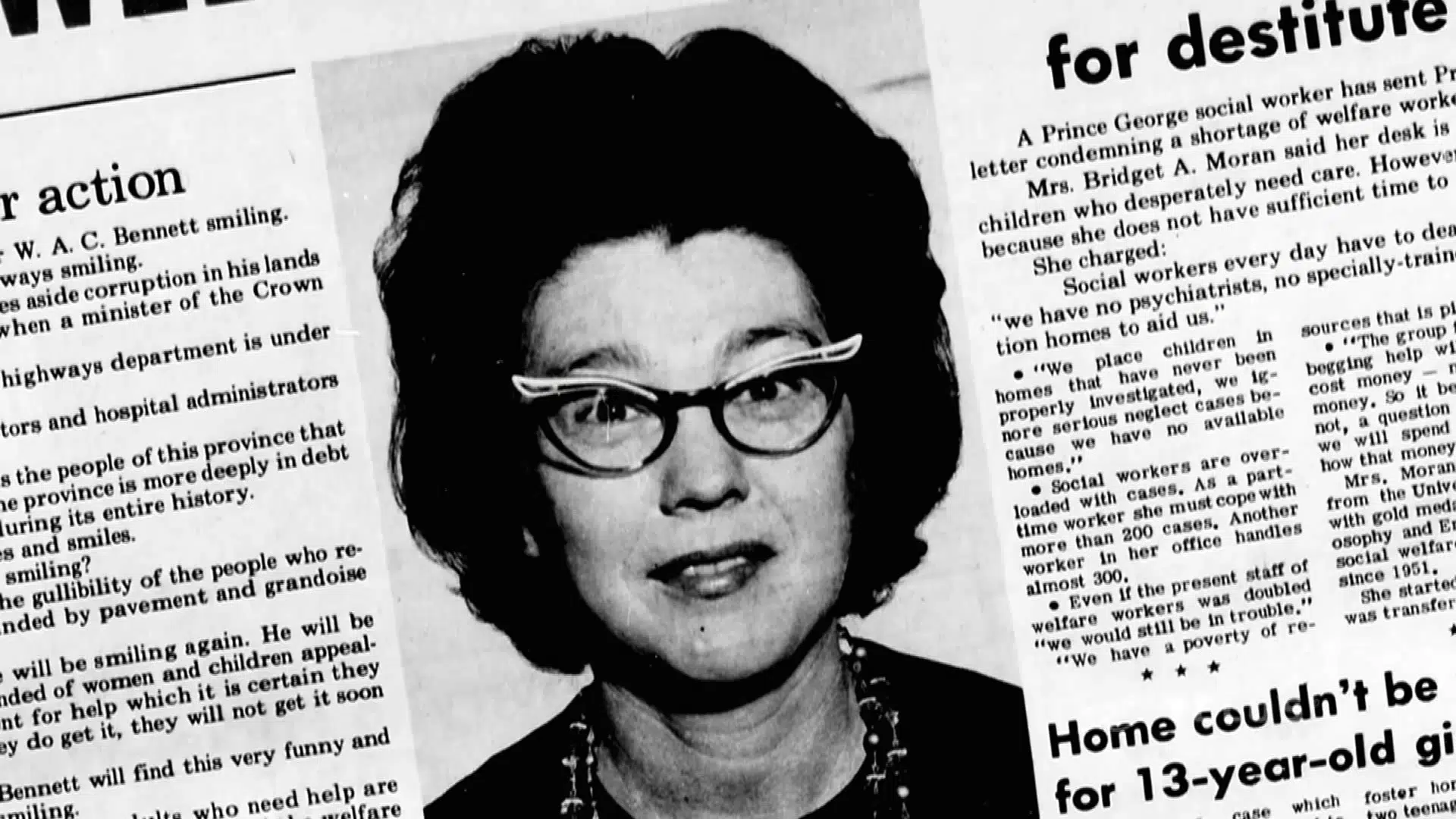
A History of Management: Bridget Moran Place
The history of Bridget Moran Place is a story of community activism followed by decades of institutional management and a recent shift toward new oversight. Understanding this timeline helps residents see how the building’s administration has evolved since its inception.
2001: The Founding and the NHS Era
Bridget Moran Place officially opened its doors in July 2001. The project was established to provide supportive long-term housing for individuals in the Downtown Eastside. From the very beginning, the Neighbourhood Housing Society (NHS) held the primary operating agreement with BC Housing and owned the building.
For over two decades, the NHS remained the primary authority over the building’s operations. During this long tenure, the society established its practice of utilizing SPARC BC employees as board members and agents. This period was often characterized by a lack of public disclosure regarding board activities and financial transparency—a trend that became a point of significant community concern as the years progressed.
The Partnership with RainCity Housing
While NHS owned and managed the building, a partnership was formed early on with RainCity Housing (then known as Triage Emergency Services & Care Society) to provide on-site support services. Over time, the balance of these roles shifted as RainCity took on more responsibility for the day-to-day welfare of the tenants, while NHS maintained the physical property and the administrative “back-end.”
2024–2025: The Transition and NHS’s Departure
Following years of rising scrutiny from residents and advocacy groups like B.E.P.R.A., the management landscape underwent a major change:
- The Loss of Control: After more than 23 years, the NHS began losing its operating agreements across its portfolio, including The Oasis and eventually Bridget Moran Place.
- The End of the SPARC BC Model: The era of SPARC BC employees serving as the primary agents for the building’s governance effectively came to an end as the society’s reach diminished.
- Leadership Changes: By late 2025, senior leadership at NHS, including the long-time Board President, had officially stepped down, coinciding with the scrub of property details from the NHS website.
2026: A New Chapter
As of 2026, Bridget Moran Place is navigating a post-NHS reality. While the physical legacy of the society remains, the operational control is now largely transitioned to new oversight. Residents continue to advocate for the transparency and accountability that was missing for much of the building’s first twenty years.
For archival records and more on the history of this transition, please visit the B.E.P.R.A Archive.
Current Status of the Operating Agreement
There is often confusion regarding whether the Neighbourhood Housing Society (NHS) is still “in charge.” Technically, because Bridget Moran Place opened in 2001, the original 35-year land lease and mortgage agreement would normally run until 2036. However, the functional management has changed significantly.
For residents, this means that while NHS may still be the “Landlord of Record” on some documents, your daily accountability and service provider is RainCity Housing.